
Industrial automation is entering a new phase. For decades, the dominant model revolved around programming individual machines—robotic arms, CNC units, conveyor systems—each configured and managed separately. While this approach delivered efficiency gains, it also created complexity, dependency on specialized programmers, and fragmented robotic environments.
Today, a new paradigm is emerging: orchestration over programming.
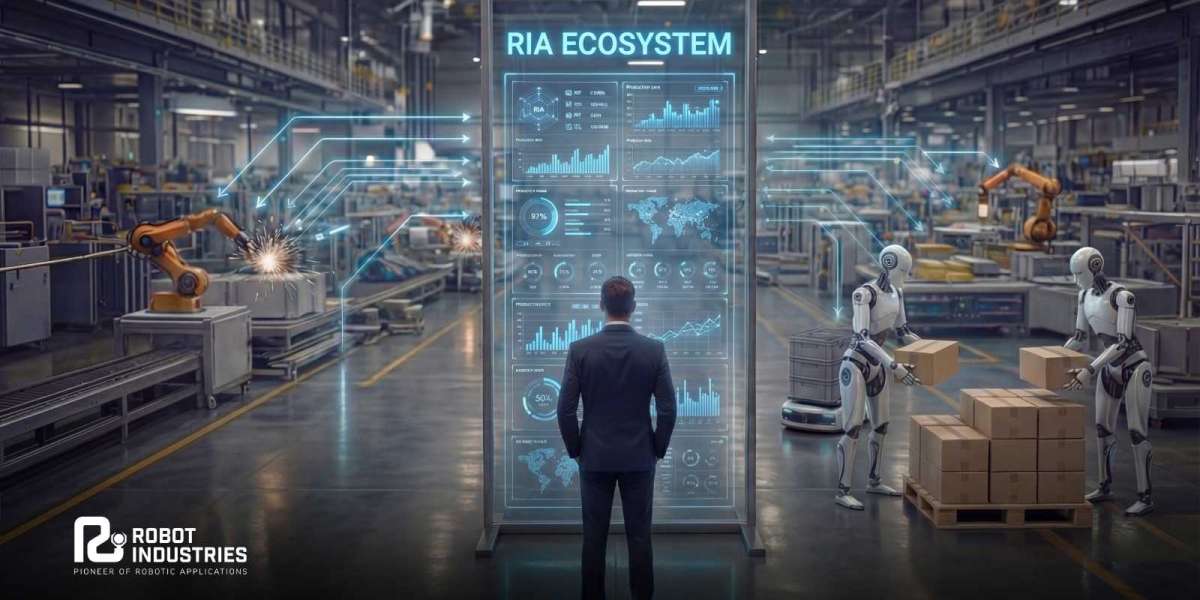
Instead of treating robots as isolated tools, modern automation strategies now focus on coordinating entire fleets in real time. This shift reflects the increasing complexity of industrial ecosystems, where multi-vendor robots, AI agents, and legacy systems must operate in harmony. In this context, platforms like the RiA Ecosystem Manager are redefining how organizations approach automation.
From Code to Coordination
Traditional automation requires detailed coding for each robotic unit. Every change—whether workflow adjustments, mission reassignment, or production scaling—demands programming intervention. This not only slows adaptation but also deepens reliance on scarce technical talent.
Orchestration platforms eliminate that bottleneck.
Rather than writing code, managers visualize operations through centralized dashboards. They assign missions, adjust workflows, and monitor performance across heterogeneous fleets in real time. The result? The human becomes the conductor, and robots become coordinated instruments within a digital orchestra.
This approach dramatically reduces operational friction and empowers operational managers—not just programmers—to influence production flows.
Solving the Multi-Vendor Challenge
Most industrial environments do not operate with a single robotic brand. Instead, facilities evolve over time, integrating different systems from multiple manufacturers. The result is fragmentation: separate interfaces, incompatible protocols, and limited interoperability.
Forward-looking companies such as Robot Industries are addressing this challenge head-on by prioritizing universal compatibility. Instead of reinforcing vendor lock-in, orchestration platforms unify diverse architectures under one control layer.
By centralizing visibility and command, businesses gain scalability without sacrificing flexibility. They can expand operations, integrate new hardware, or adopt AI agents without rebuilding their infrastructure from scratch.
Intelligent Collaboration at Scale
Orchestration also unlocks collaborative intelligence. In a synchronized ecosystem, robots no longer operate independently. They respond dynamically to proximity, task urgency, and system load.
For example, if one robotic unit encounters delay, another can intervene to maintain workflow continuity. This level of coordination transforms static automation into adaptive automation.
The implications are significant:
- Reduced downtime
- Optimized production cycles
- Improved energy efficiency
- Greater responsiveness to market demands
Digital Twins and Predictive Optimization
One of the most transformative aspects of modern orchestration is digital twin simulation. Before production even begins, managers can test workflows virtually, validate mission sequences, and identify inefficiencies.
Combined with AI-driven insights, this creates predictive optimization. Real-time data feeds continuously refine assembly line performance, providing actionable recommendations rather than reactive troubleshooting.
In an era where agility defines competitiveness, this proactive model becomes a strategic advantage.
The Bigger Shift: Democratizing Automation
Perhaps the most important impact of orchestration is accessibility. By removing the programming barrier, advanced automation becomes usable by a broader workforce.
This democratization addresses a pressing industry problem: the global skills gap. Companies no longer need to depend exclusively on niche programming experts to maintain high-performance robotic systems.
Instead, operations leaders can manage complexity visually and strategically.
Conclusion
Industrial automation is no longer about controlling individual machines—it’s about synchronizing intelligent ecosystems.
As orchestration platforms mature, they will become the foundation of smart manufacturing, logistics, infrastructure, and facility management. The shift from programming to real-time coordination marks a decisive turning point in Industry 4.0.
The organizations that adopt orchestration early will not just automate faster—they will operate smarter.