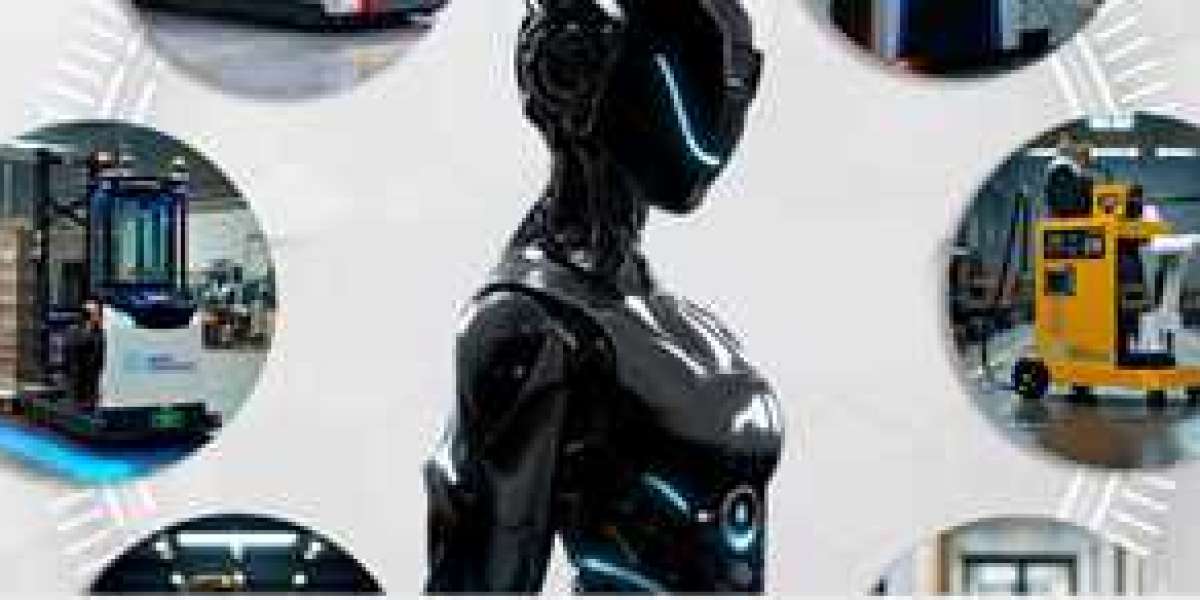

Robot Industries has taken a bold step toward redefining industrial automation with the introduction of the RiA Ecosystem — a cognitive automation platform engineered to eliminate programming entirely. This new system integrates advanced vision, AI-driven decision-making, and modular robotics to create autonomous robots capable of analyzing, interpreting, and performing tasks on their own. For operators, this means automation becomes a matter of issuing simple commands rather than mastering complex programming languages.
Despite major advances in robotics hardware, the industry has long faced a bottleneck: programming. Setting up a robot for even a basic task can take days or weeks, demanding specialized skills and continuous adjustment. Robot Industries has now removed that dependency by building cognitive intelligence directly into the automation layer.
“Our mission goes beyond building robots. We build the intelligence that makes them truly autonomous,” explains SERGIU SPINU, CEO of Robot Industries. “RiA Ecosystem represents a transformation from programmed automation to cognitive execution. Operators tell the system what they need, and RiA handles everything else — analysis, interpretation, and real-time decision-making.”
A Cognitive System Built on Five Principles
The RiA Ecosystem is designed around five strategic pillars that redefine how robotics is deployed and scaled across industries:
- Universal Accessibility
RiA enables anyone — regardless of technical background — to use robotics effectively. There is no software to configure, no teaching cycle to perform, and no programming to learn. Operators simply tell RiA what needs to be done, and the system autonomously determines how to achieve it.
- Complete Cognitive Transparency
Users gain full visibility into how the system perceives and understands its tasks. RiA displays what it sees, how it interprets geometry, and how decisions are made. Transparency builds trust and helps teams monitor autonomous operations confidently.
- Seamless Scalability
RiA’s universal intelligence layer works across industries and applications. Whether a company deploys a single robot or hundreds across multiple facilities, the same cognitive engine adapts to welding, logistics, inspection, cleaning, machine tending, and humanoid operations without new programming.
- Future-Proof Intelligence
With the rapid evolution of AI, the RiA platform is designed to adapt and improve over time. Continuous updates enhance capabilities, allowing businesses to benefit from ongoing advancements rather than facing premature system obsolescence.
- Secure and Reliable Execution
RiA Ecosystem is engineered for dependable industrial performance. Built-in security, controlled access levels, and extensive reliability testing ensure that autonomous operation meets the highest industrial standards.
Transforming Industrial Automation Across Sectors
RiA Ecosystem consolidates a wide range of applications under a single intelligent platform. Instead of relying on programmed tasks, the system autonomously interprets its environment and executes each activity with human-like adaptability.
Key applications include:
- Zero-Programming Welding:
RiA identifies seams and geometry automatically, enabling accurate welds without predefined paths. - CNC Machine Tending:
Robots understand machine states, load materials, and manage equipment autonomously — no setup required. - Mobile Robots and Logistics:
RiA-powered robots navigate warehouses dynamically, adapting to moving obstacles and changes instantly. - Facility Cleaning Wheelbots:
Cleaning robots adapt routes based on real-time environmental understanding rather than pre-configured maps. - Automated Inspection:
Vision systems detect mismatches, measure components, and validate part quality autonomously. - Humanoid Robotics:
RiA powers advanced humanoid platforms capable of executing tasks with remarkable precision and flexibility. - Multiservice Robotic Platforms:
A single robot can shift between duties such as material transport, scanning, and facility operations using RiA’s cognitive intelligence.
The Intelligence Layer Behind RiA
RiA functions as an independent cognitive layer that sits above the physical robotics hardware. This decoupling allows businesses to use the same intelligence across different robot types and brands.
The operator workflow is streamlined into five steps:
- Command: The user gives natural instructions.
- Analysis: RiA evaluates the environment and task.
- Execution: The system performs tasks autonomously with real-time adjustments.
- Monitoring: Operators receive complete visibility into cognitive processes.
- Scaling: The same intelligence is deployed across multiple robots and facilities effortlessly.
Since RiA is compatible with leading robot manufacturers, companies can upgrade existing systems rather than invest in entirely new equipment.
A New Standard for Global Automation
Robot Industries envisions a future where automation requires no programming at all. Instead of training workers to think like programmers, the emphasis shifts to giving machines the intelligence needed to understand and execute tasks autonomously.
“Businesses often view automation as complicated, expensive, or rigid,” says SPINU. “With RiA, we remove that complexity. Operators simply describe what needs to be done — the system handles everything else.”
RiA Ecosystem is now available for businesses seeking intelligent automation. Early adopters can access guided onboarding, training support, and ongoing optimization.
The future of robotics belongs to cognitive automation, and RiA Ecosystem stands at the forefront — enabling automation that works naturally for people.